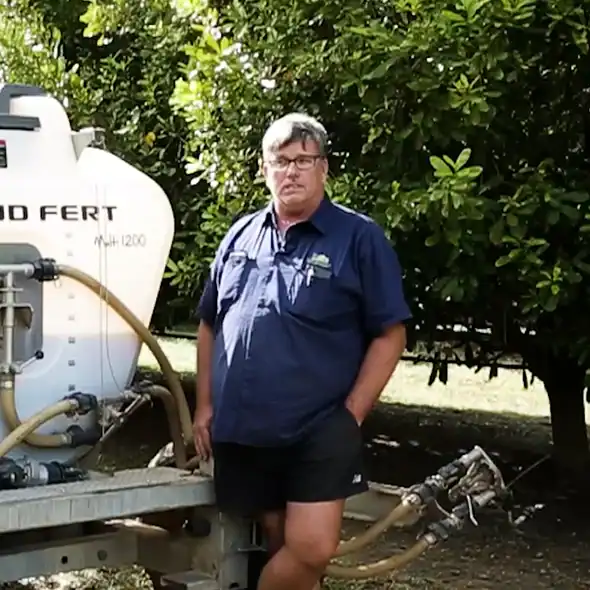
Dave Shackson
Bundaberg QLD, Australia
This story was filmed in 2020 and reflects one farmer’s own experience with their Tow and Fert. Every farm is different, so please treat it as a story rather than a forecast for your place.
One machine, 120,000 Trees.
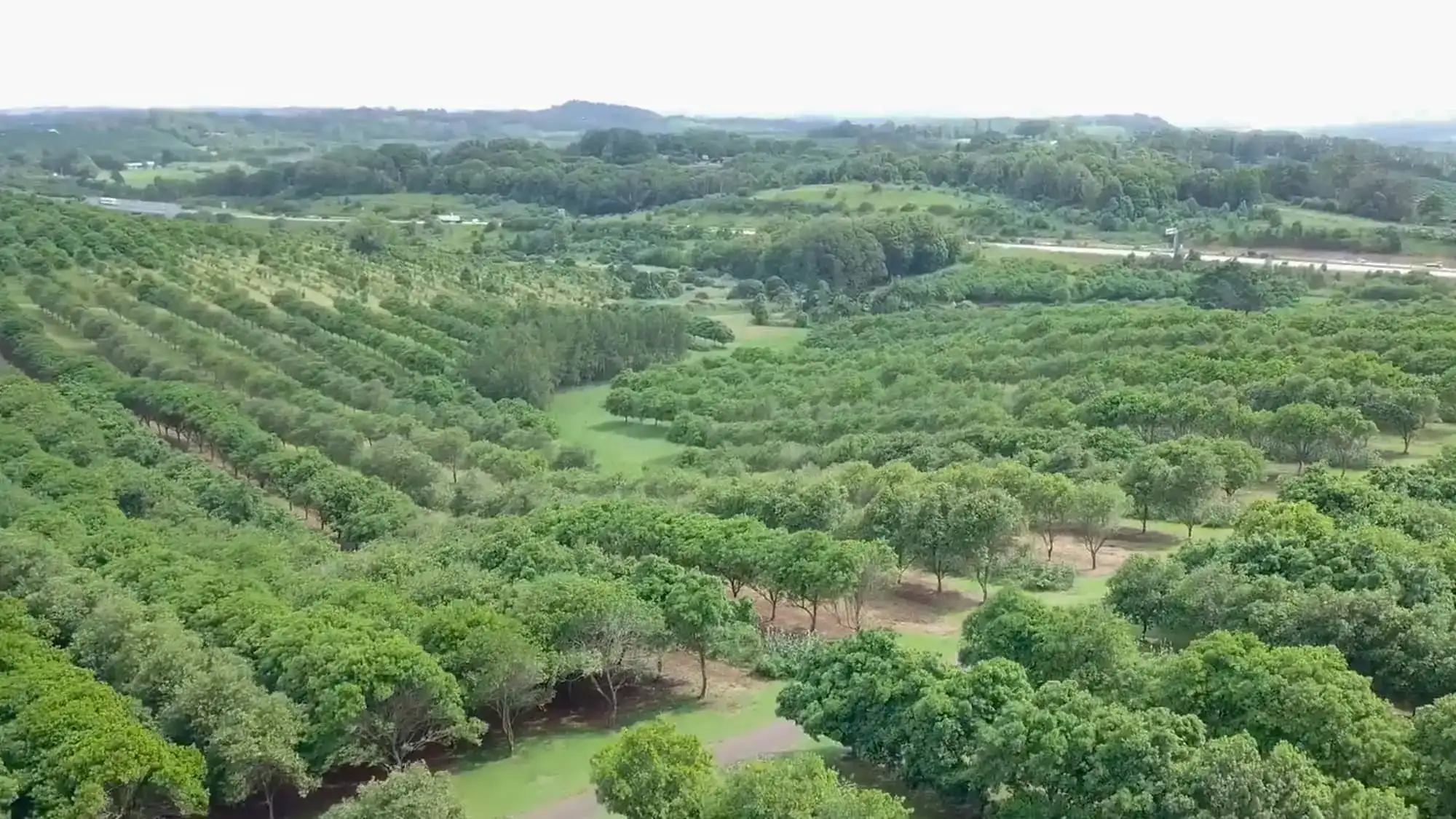
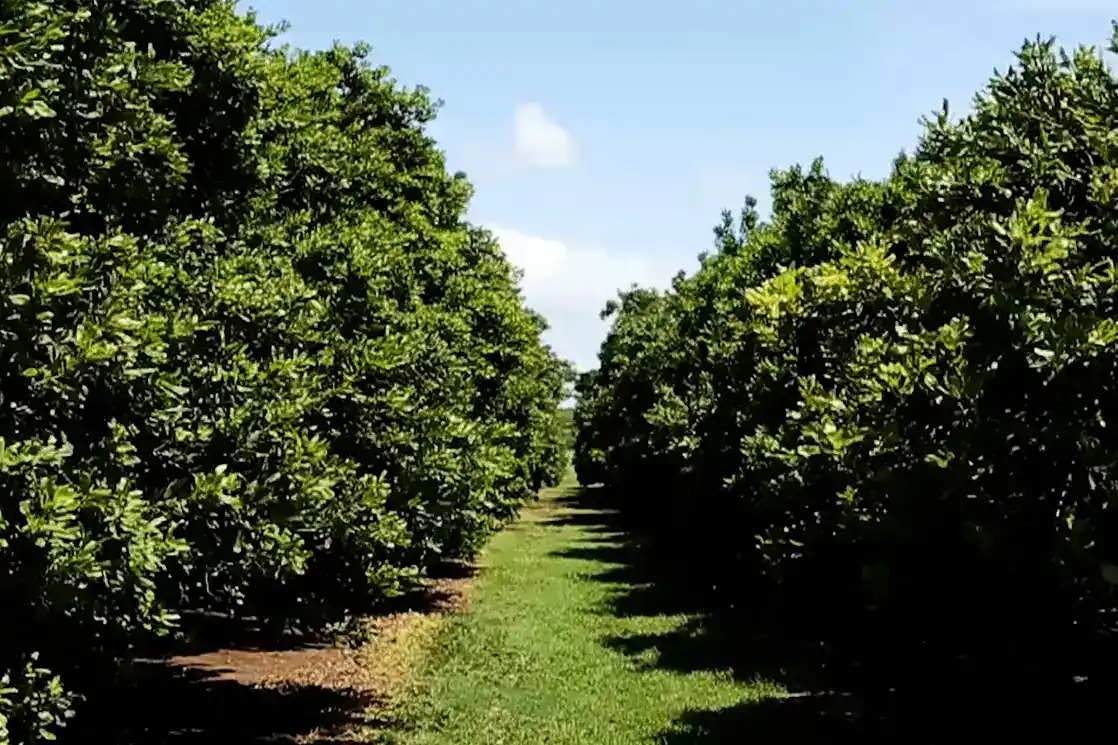
For Dave Shackson, farm manager on a 120,000 tree macadamia operation in Bundaberg, the challenge was never about finding a better fertiliser. It was about applying nutrients precisely, tree by tree, across an orchard too large for a fixed system to manage well.
“I’m a manager on a farm in Bundaberg. We look after about 120,000 trees of macadamia.”
Before the Tow and Fert, the farm relied on a fertigation system built around tanks, injection pumps and mono pumps, feeding product through the sprinkler network.
“Prior to the Tow and Fert, all our farms are set up with fertigation tanks, injection pumps, mono pumps. We inject through the sprinklers, the poly.”
As the orchard grew, that system started to strain under its own scale.
“The job was getting so intense, so large that we had to look elsewhere to get some products on the farm. Tow and Fert come along and we had to look at it.”
The shift to a tractor towed machine gave Dave something the fixed sprinkler system couldn’t, control over exactly where product went.
“With our irrigation system, if we have to put on some micronutrients, calcium, whatever, it goes into its thousand trees. All thousand trees may not be the same. There might be ten trees on the end which are different to the rest of the row.”
Instead of treating every tree in a block the same, Dave now adjusts on the move, speeding up and slowing down as conditions change down each row.
“So with the Tow and Fert, we’ve got set speed, set amounts will go in this tank, but we slow down and speed up during the trees. It’s not an exact science, but if you’re going up and down your rows, you can see, okay, I need to add a little bit more here, a little bit less here.”
That precision isn’t about applying more product. It’s about directing the same total input to where it’s actually needed.
“I’m not saying we use any more, because we take it away from where the trees look good. We put it where we need it, at the end of the rows where the soil changes and everything else, where our crop yields differ.”
The farm now runs the machine on a fortnightly cycle through the growing season.
“We utilize this every fortnight from August right through to harvest.”
For Dave, the value comes down to certainty, knowing exactly what’s gone where, and knowing it hasn’t ended up anywhere else.
Thinking about Tow and Fert?
Talk with a specialist
Tell us about your operation and we’ll match the right model and setup for you.
“I know that 600L has gone in those 10 or 12 rows. What have I done? I’m certain it’s there. It’s nowhere else on the farm. It’s not in the undergrounds, it’s not anywhere. It’s actually where I want the product.”
With a small team running a large orchard, ease of use mattered as much as precision. Dave says any of his tractor operators can run the machine without needing to understand the mechanics behind it.
“We’ve got 6 or 7 guys working on the farm. They’re all tractor operators. They don’t need to know the mechanics of anything other than driving a tractor and a few hydraulics on this machine. I can put any guy in there and say, go and put product A in at this rate, and product B at this rate, add it with water. Go ten kilometers an hour, start here and go across the farm.”
Dave also values what the job puts him in front of, the trees themselves, rather than a spreadsheet.
“Even myself, I drive this machine, you’re driving up and down your own rows, looking at your trees. You’re not in an office doing it with a textbook. You must get out in the orchard and have a look. And what a great opportunity to go up and down your rows, 10km an hour, having a look at your trees and seeing the results. Perfect.”
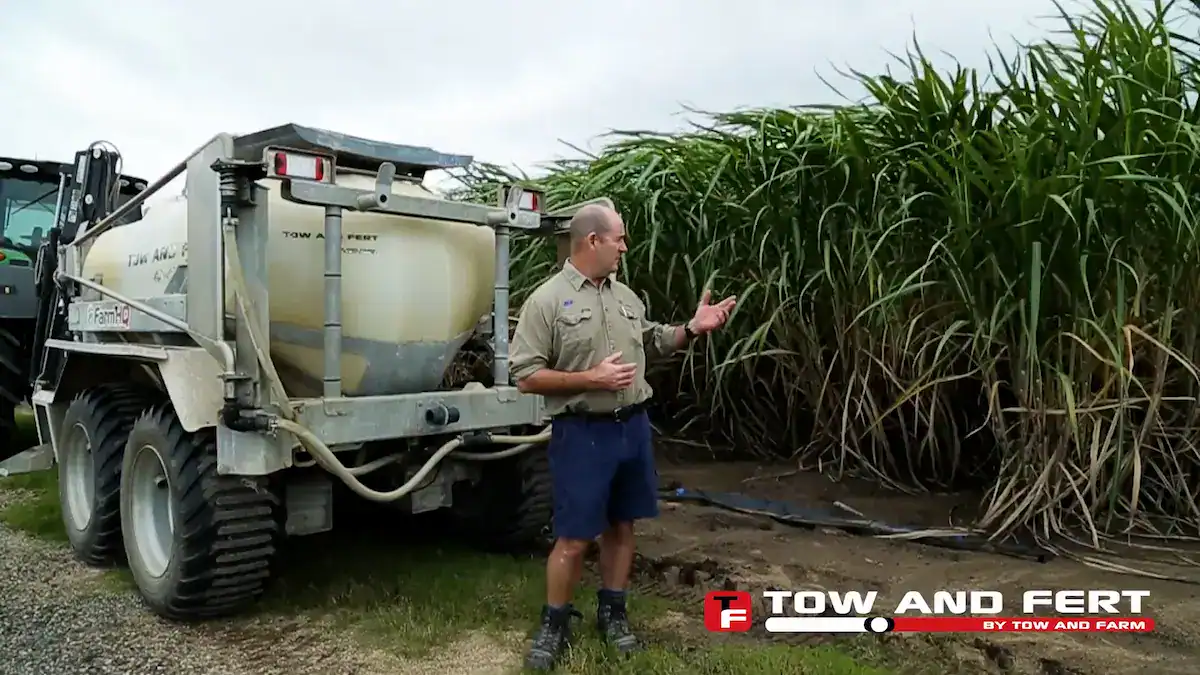
The farm has run a Tow and Fert Multi 1200 for four years, since before the orchard reached its current scale.
“We bought this machine four years ago. I mean, we always knew we were going to get to approximately 120,000 trees, but back then we had maybe 60 or 70,000 trees planted. The 1200 series was out in the market. We grabbed it. We utilized it.”
Dave also points to a small but practical example of support along the way, when the standard nozzle wasn’t suited to his tank volumes.
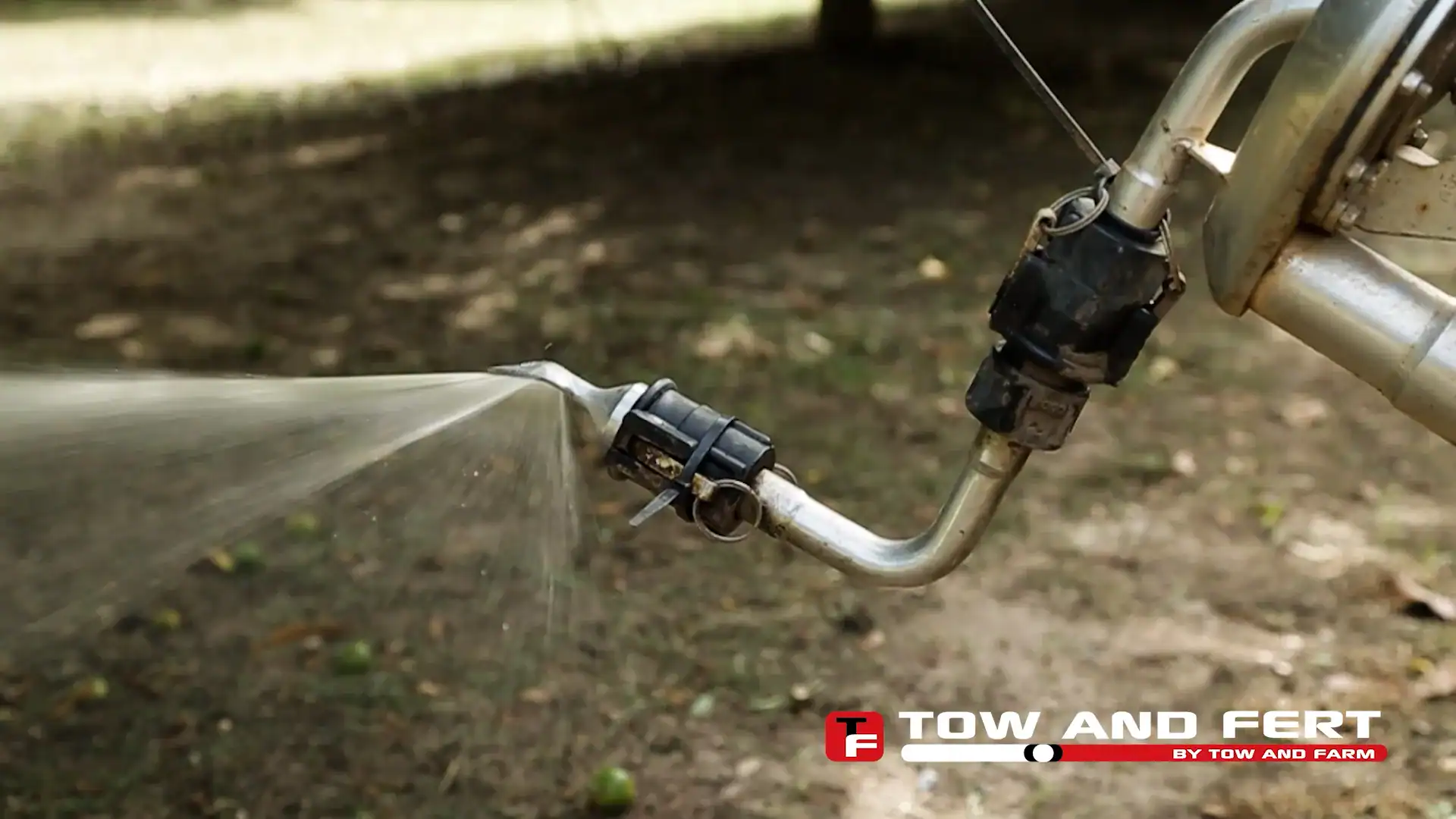
“When we first got it, we didn’t have a jet on the end small enough for us, because it’s a very good agitation system on this machine. So we spoke to the Tow and Fert guys and said, listen, can you just make a jet smaller? Therefore we can get further with our tank. They said yep, they done it. We’ve got a jet, which is great. It’s a great machine.”
Four years and roughly double the trees later, Dave is clear about what the machine has meant for the way the farm operates.
“I don’t think we could operate where we are with the amount of people we’ve got, without one of these machines on the size of our farm.”
This is Dave’s account of his own operation. Every orchard’s different.